Little Gavroche
Les MisérablesLittle Gavroche is a Parisian street child whose lively independence grows out of parental neglect and extreme poverty. The novel first presents him as both resourceful and exposed: he can turn the street into a place of freedom, but cannot escape the social and familial abandonment that leaves him without shelter, food, warmth, or affection.
Identity and Background
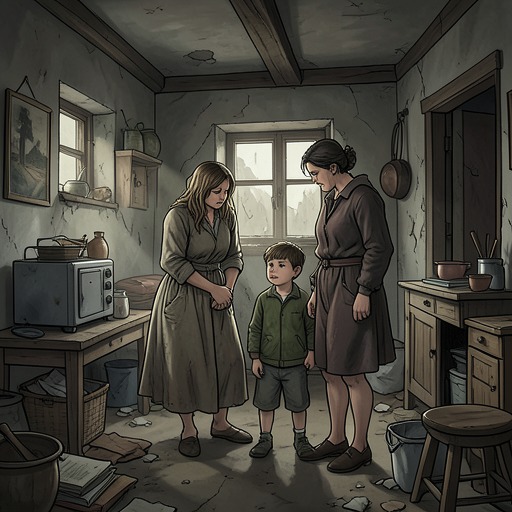
Little Gavroche is about eleven or twelve when he appears on the Boulevard du Temple, eight or nine years after the events recounted in the second part of the story. Charity has dressed him in cast-off clothes that do not match his family: men’s trousers not received from his father and a woman’s jacket not received from his mother. Although he has both parents, his father gives him no thought and his mother does not love him; the narrator therefore describes him as one of those children who have parents yet are orphans. His family lives in a single attic room at Gorbeau House, where hardship is accompanied by cold in the hearth and, more painfully, cold in the hearts. When he visits, he is asked where he has come from and answers that he has come from the street; when he leaves, he is asked where he is going and answers that he is going to the street. His mother asks what he has come there for. The name Little Gavroche is used for him on the Boulevard du Temple, and the narrator suggests that he probably bears it because his father is called Jondrette.
Streetwise Freedom and Social Exposure
On the boulevard, Little Gavroche turns deprivation into a rough, improvised independence. He moves about, sings, plays a street game, rummages through gutters, and steals now and then with the untroubled gaiety of a cat or sparrow. His quickness and mocking humor are part of that survival: he laughs when called a rascal but takes offense at being called a thug. The distinction suggests a child who can make a place for himself in the street’s language even when respectable society has none to offer him.
That freedom is precarious rather than secure. The narrator contrasts children with adults ground down by the machinery of social order: while they remain small, the poor can sometimes slip through its gaps. Little Gavroche embodies both sides of that reprieve. His agility lets him move beyond the household that has rejected him, but his independence is the consequence of abandonment, not protection. The street gives him room to act; it does not give him a home.
Family and Emotional Distance
Little Gavroche’s visits to Gorbeau House expose a sharper contrast than poverty alone: he returns to a family in which his sisters receive his mother’s love, while he encounters no smile and is asked why he has come. The narrator describes him as living in this absence of affection like pale grass growing in a cellar. The image makes his neglect seem less like a single act than an atmosphere in which he has had to grow. His parents have cast him into life, but the household he returns to offers no warmth or welcome.
Yet the narration does not present him as consciously nursing resentment. He does not suffer from his exclusion in a way he can name, and he holds no one responsible; he does not even know what a father and mother are supposed to be. That unawareness is itself part of the injury: the street has become his ordinary world before he has a measure by which to recognize what family care should mean. His mother’s affection for his sisters makes his abandonment particular, while his lack of reproach shows how thoroughly he has adapted to it.
The Barricade and Death
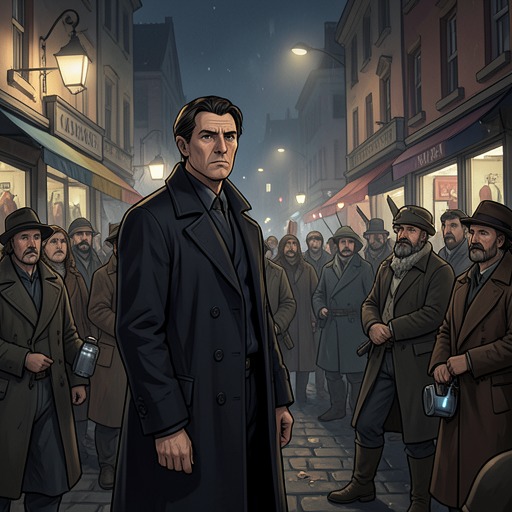
At the Chanvrerie Street Barricade, Little Gavroche’s street-born agility becomes a means of helping the insurgents—and exposes him to lethal danger. Under fire, he gathers ammunition, emptying cartridge pouches and filling his basket while soldiers and National Guards repeatedly take aim. He treats the exchange as a game of pursuit: dropping low, darting behind a doorway, vanishing and reappearing, then taunting the shooters with mocking gestures. The insurgents watch in anxious suspense as the barricade trembles and the child keeps singing. The scene turns his familiar quickness into something at once exhilarating and terrible: the skill that has helped him survive the streets carries him through a field of bullets, but cannot make him invulnerable.
The narration magnifies the contrast between his small body and the violence directed at it. Little Gavroche is likened to a sparrow pecking at hunters and imagined as an uncanny, invulnerable sprite, always quicker than the bullets pursuing him. Yet the apparent invulnerability is only a reprieve. A better-aimed or more treacherous shot finally strikes him. He totters and falls; then, with blood running down his face, he struggles upright, raises both arms, looks toward the direction of the shot, and begins to sing. The insurgents’ cry marks the cost of the moment: the child who had seemed to turn gunfire into play has been fatally hit.
His death completes the novel’s stark contrast between a child’s lively freedom and the violence of the world that leaves him unprotected. On the street, smallness has seemed to let the poor slip through the gaps in social order; at the barricade, it makes Little Gavroche a conspicuous, vulnerable target. His courage and irreverence remain visible even as the scene turns from comic evasion to bloodshed, making his final resistance inseparable from the childhood abandonment that preceded it.